
CASE STUDY, RESIDENTIAL
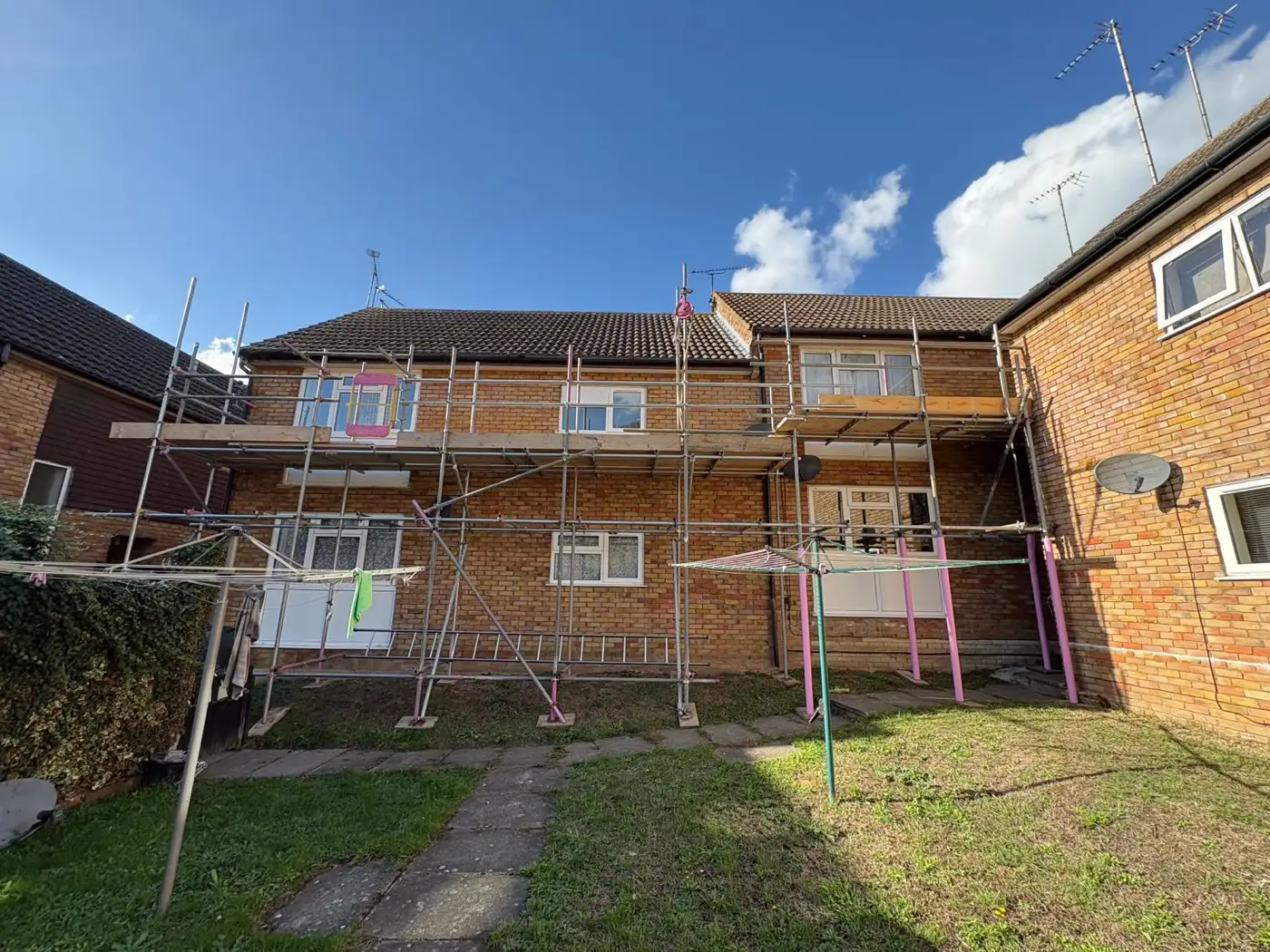
Two Residential Blocks, Swanley
Access scaffold for an asbestos removal contractor, with both blocks lived in from start to finish
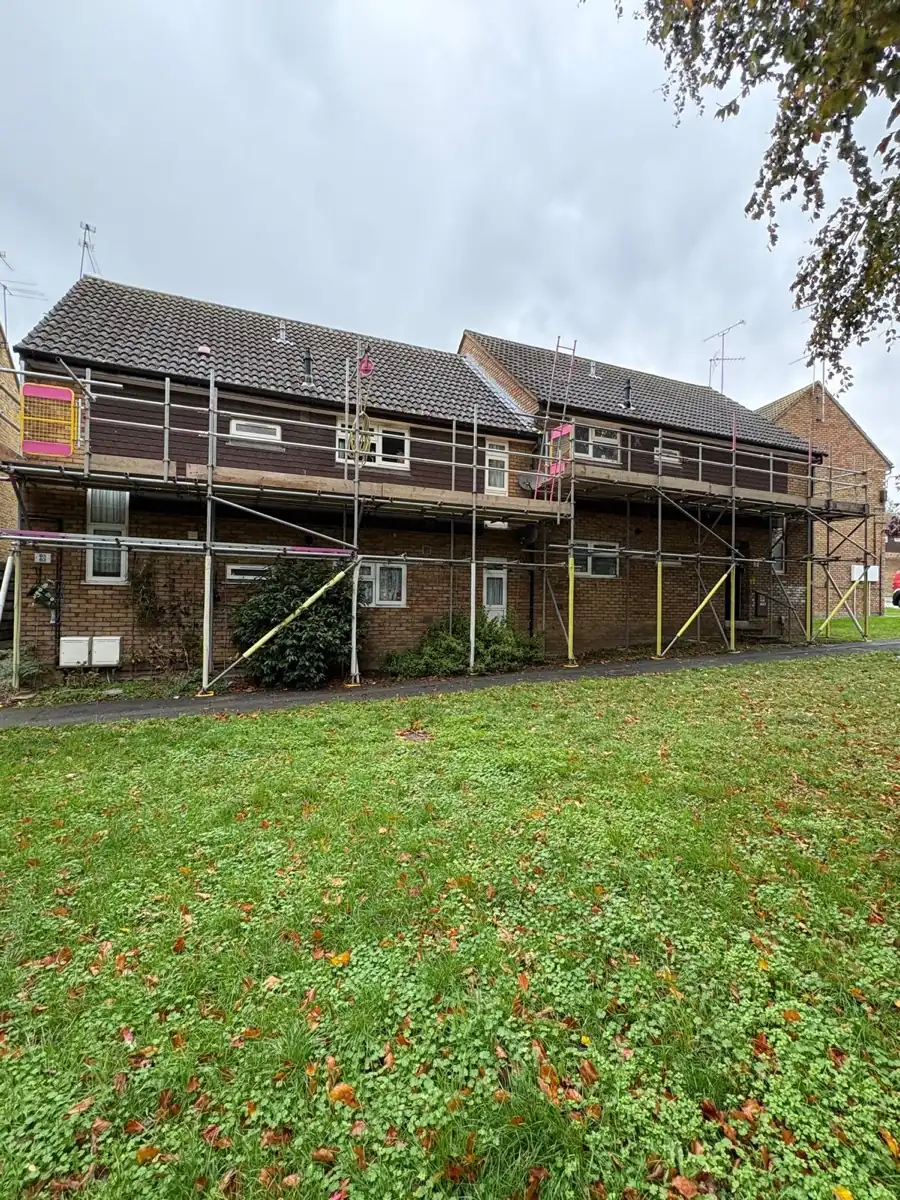
Pinnacle Scaffolding was appointed by an asbestos removal contractor to provide access to two residential blocks in Swanley. Both blocks stayed fully occupied for the whole job. Residents came and went from their front doors underneath the working lifts, hung washing out in the garden behind, and used the alleyway between the two blocks exactly as they always had.
That is the part of a job like this that decides whether it goes well. The scaffold itself is straightforward. Putting it up around people who live there, without closing their paths or making them walk in the road, is the bit that takes thought.
The Challenge
Occupied residential work puts the public underneath the job from the first standard to the last. There is no compound, no hoarding line and nobody signing in. People walk past at seven in the morning on their way to work and at six in the evening carrying shopping, and the scaffold has to be safe for all of it without anyone having to think about it.
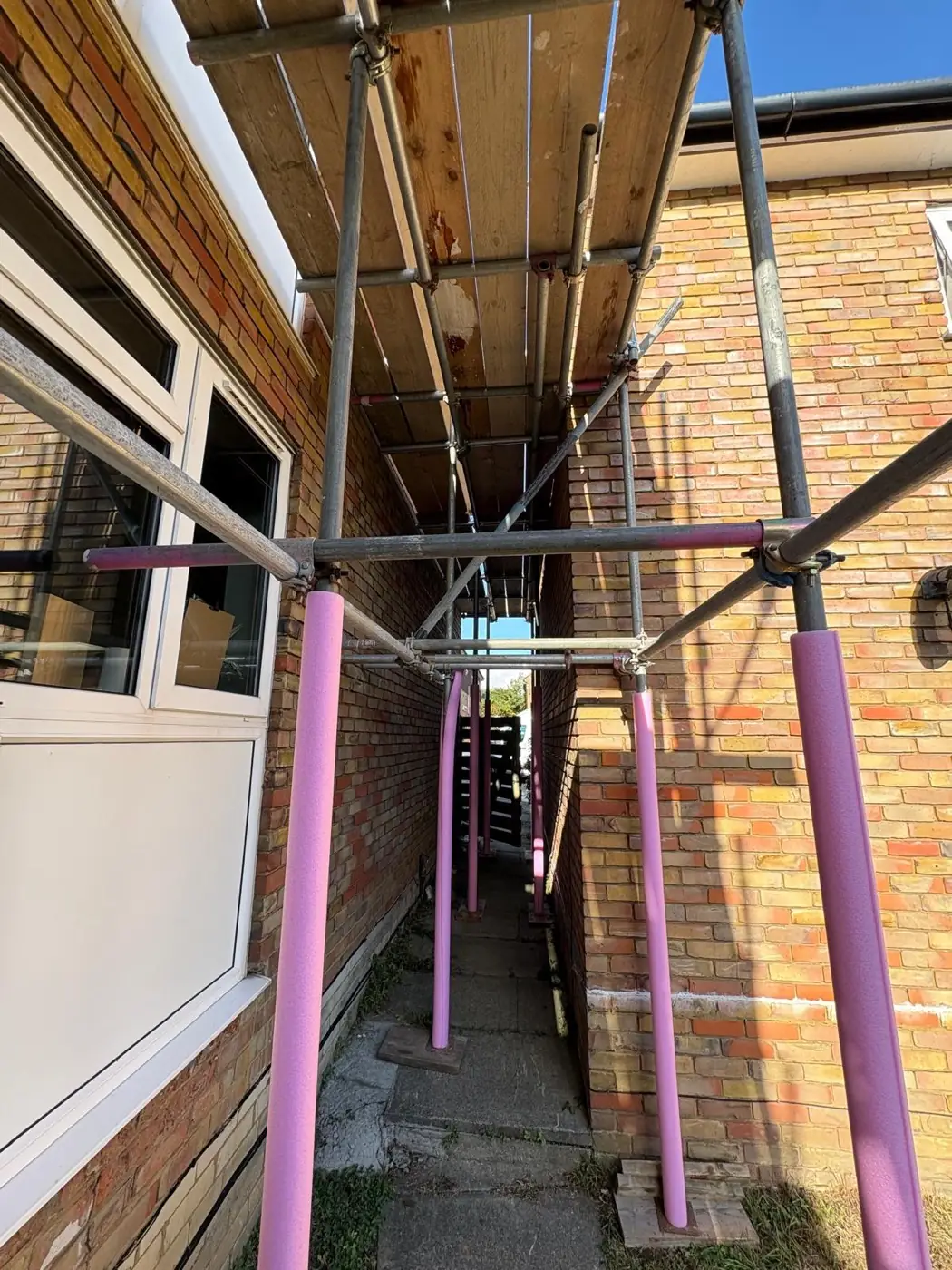
The two blocks sit close together with a narrow pedestrian alleyway running between them. That alleyway is a daily route for the people who live there, and it left very little ground to set a base out on. Closing it would have pushed residents round the long way or into the road, which is not an acceptable answer on a job that runs for weeks.
Asbestos removal brings its own requirement on top. The removal team needs a stable, properly boarded platform at eaves and soffit level, set at a height that lets them take material down in a controlled way. A platform that is slightly too low or too far off the face makes the removal harder and raises the risk of disturbing material that should come away intact.
What a Removal Contractor Needs From a Scaffold
Scaffolding for licensed asbestos work is not the same brief as scaffolding for a re-roof or a render. The removal team is working to a plan of work and a notification period, and once they are on site their programme is fixed. If the platform is at the wrong height or the wrong distance off the face, they cannot simply adjust and carry on. They lose a day, and a lost day on a notifiable job is expensive.
The three things that matter most are height, reach and stability. The working platform wants to sit so the operative is at a comfortable level with the material rather than reaching above their head, because reaching up is how soffit board gets snapped instead of unscrewed. The platform wants to be close enough to the face that nothing has to be stretched for, and far enough out that a full sheet can come away and be handled without being tipped. And it has to be solid, because material is being lowered rather than dropped.
On an occupied block there is a fourth thing, which is everything happening at ground level. Residents are still using the doors and paths directly beneath the works. The scaffold has to leave those routes open and obvious, and it has to be built so the removal team can seal and sheet their own working area when they need to, without that enclosure blocking a front door or a fire exit.
None of that gets decided from a drawing. It gets decided by walking the building with the person who is going to do the removal, before anything is priced.
Our Approach
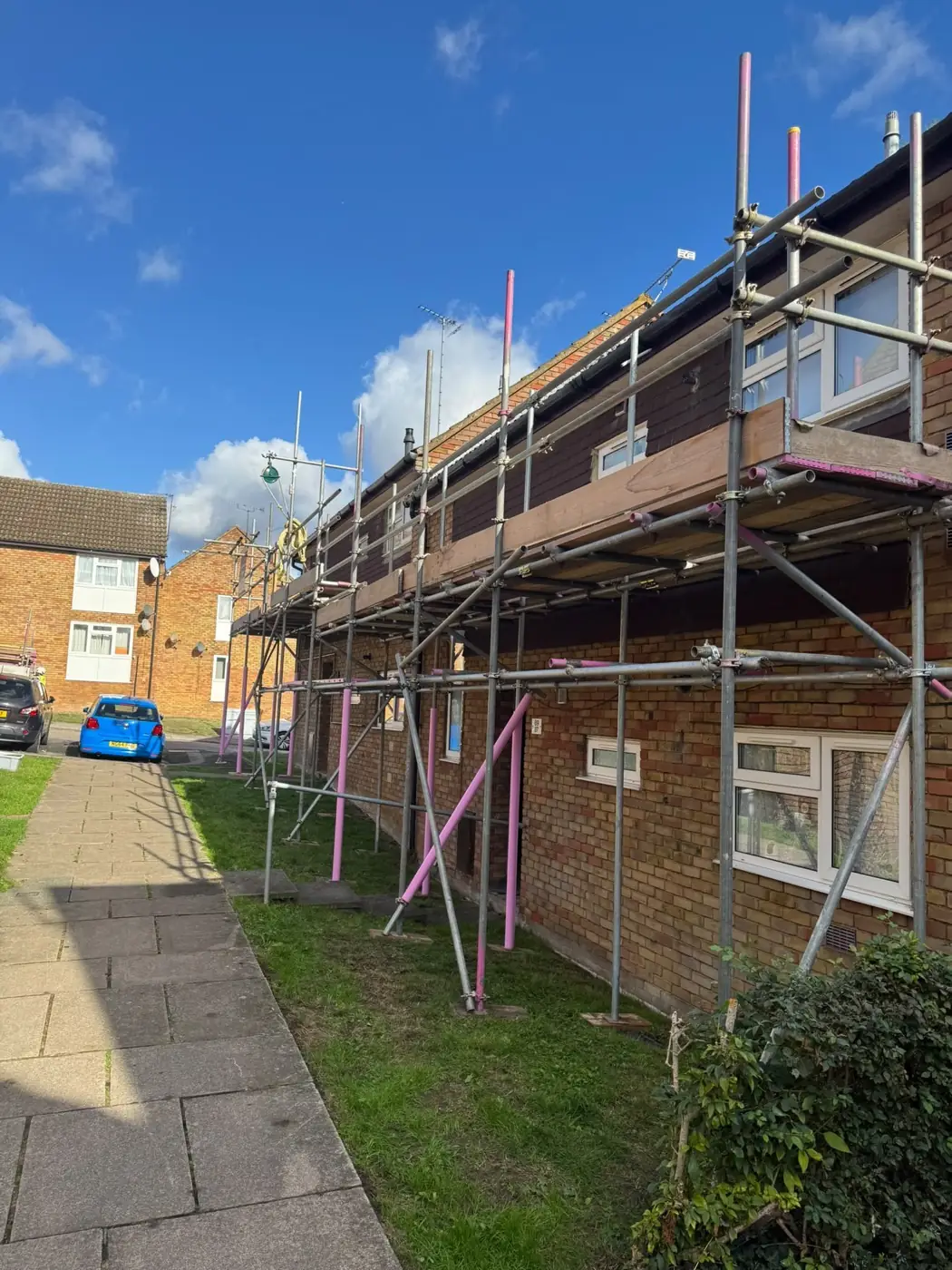
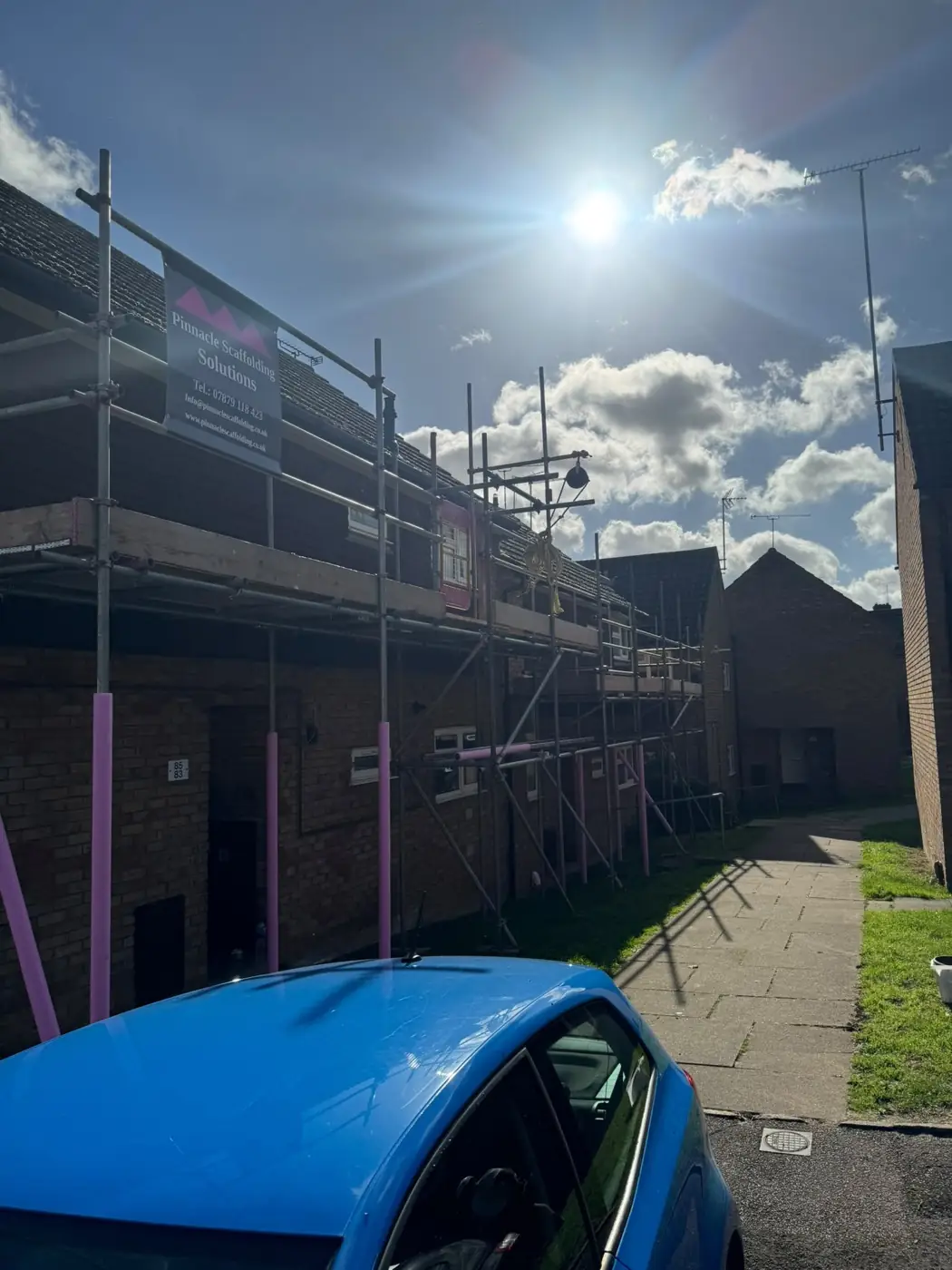
Pinnacle erected independent tied scaffold to both blocks, with fully boarded working lifts and toe boards at every level. The lift heights were set against the eaves line so the removal team had continuous, level access along the full run of both buildings rather than working off staggered platforms.
Foam pole guards went onto every standard at pedestrian height. They are a small thing and they cost almost nothing, and on an occupied block they are the difference between a resident walking past a scaffold and a resident walking into one. On the alleyway elevation the scaffold was built to keep the route open underneath, so people carried on using it for the duration.
When the removal was finished the scaffold came down, the ground was cleared and the site was handed back. RAMS and method statements were provided as standard, and every operative on site held a current CISRS card.
Pricing a removal on an occupied block? Call 07879 118 423 and we will give you access and sheeting figures off your survey.
KEY CREDENTIALS
What We Delivered
Common Questions
Does asbestos removal need scaffolding?
Yes, whenever the material sits above safe reach. Asbestos is most often found at eaves, soffit and roof level on blocks of this age, and a licensed removal team cannot work off a ladder up there. They need a fully boarded platform at the right height so the material can be taken down in a controlled way rather than disturbed.
Can residents stay in their homes while the scaffold is up?
Yes, and on this job they did. The scaffold was set out so every front door, path and the alleyway between the two blocks stayed open and usable. Foam guards went on the standards at head and shoulder height so nobody walking past caught a tube.
What protection goes in for people walking underneath?
Toe boards on every boarded lift stop anything rolling off the platform, and foam pole guards go on the standards at pedestrian height. On occupied blocks we also set the base out to keep walking routes open rather than fencing them off, because a closed path just sends people into the road.
Who sorts the pavement licence in Swanley?
We do. Swanley sits in the BR8 postcode under Sevenoaks District Council, and where a scaffold needs to go over the public footway we handle the licence application, the barriers, the signage and any lighting as part of the job. On this one the scaffold stayed within the blocks' own grounds, so no highway licence was needed.
Do you work on occupied blocks for housing providers and managing agents?
Yes, and most of our residential block work is occupied. The practical difference is that the programme has to account for people living there: access routes stay open, operatives work to sensible hours, and anything that changes a resident's normal route gets flagged before it happens rather than on the morning it happens.
Related Projects
Access for asbestos removal is a regular part of what we do across Kent and South East London. Licensed removal contractors work to tight programmes and cannot afford to turn up to a platform that is at the wrong height or in the wrong place, so we would rather walk the job with you first and get the lift heights right than price it off a drawing.
We cover the full BR8 area, which takes in Swanley town centre, Hextable and Crockenhill as well as the semi-rural edges around them. Where a scaffold has to go over the public footway we handle the pavement licence with Sevenoaks District Council as part of the job, so it is not something a contractor or a managing agent has to pick up separately.
Swanley sits a few miles from our Sidcup yard, which makes it one of the quicker towns for us to get to for a survey, an adaptation or a strike. Our Swanley scaffolding page covers the rest of what we do in the town, and we work the same way in Dartford, Sidcup and Orpington.
If you are a removal contractor, a managing agent or a housing provider with asbestos works coming up on an occupied block, call us on 07879 118 423 for a free site survey.